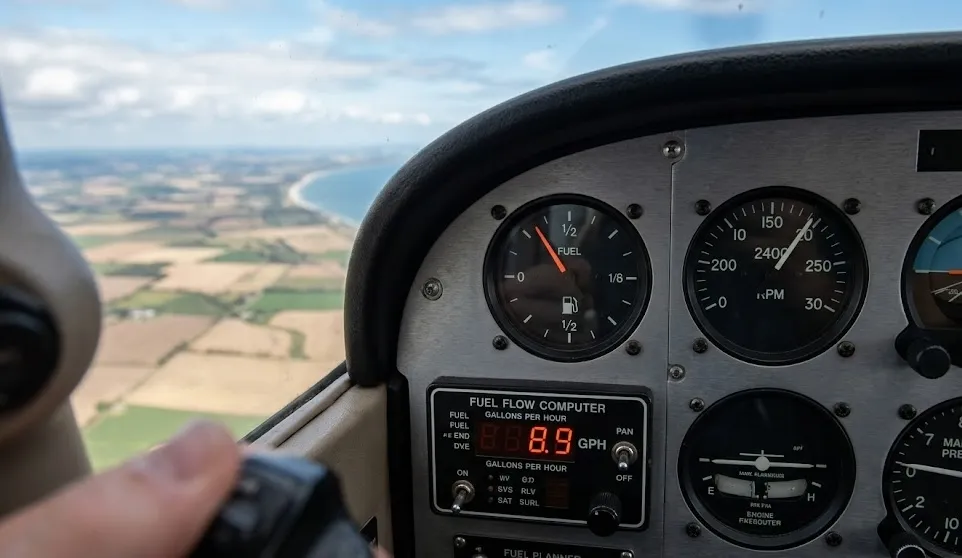
There’s a moment in every flight where you glance at the fuel gauges—not out of concern, but out of habit. And if you’ve spent any time in a Cessna 172, you already know the feeling: predictable, steady, and surprisingly efficient.
That’s part of what makes the Cessna 172 such a staple. It’s not just one of the easiest airplanes to fly—it’s also one of the easiest to understand from an operating cost standpoint.
But once you move from flying it to owning it, fuel consumption becomes more than a number. It becomes part of your planning, your budgeting, and your overall ownership strategy.
Let’s break it down in a way that actually helps.
What Is the Cessna 172 Skyhawk Fuel Consumption?
The Cessna 172 Skyhawk fuel consumption is one of the most predictable in general aviation. Most models burn between 8 to 10 gallons per hour (GPH) depending on how you fly and how the aircraft is configured.
That number doesn’t exist in isolation. It changes based on:
- Power setting
- Altitude
- Weight
- Mixture settings
And once you understand how those variables interact, you start to see how much control you actually have over fuel efficiency.
Fuel Burn, Speed, and Range by Power Setting
Below is a simplified performance table based on typical POH (Pilot Operating Handbook) data for modern 172 models (R/S/SP variants):
Cessna 172 Performance Data
| Power Setting | Fuel Burn (GPH) | True Airspeed (KTAS) | Range (NM) |
| 55% Power | ~7.5 GPH | ~105 KTAS | ~640 NM |
| 65% Power | ~8.5 GPH | ~115 KTAS | ~575 NM |
| 75% Power | ~9.5–10 GPH | ~120–125 KTAS | ~500 NM |
This is where the question how fast can a Cessna fly starts to connect with real-world cost.
Yes, you can push for speed—but it comes at the expense of range and fuel efficiency.
Model Differences: R vs S vs SP
Not all 172s behave exactly the same.
Cessna 172R
Earlier fuel-injected model with slightly lower horsepower. Efficient and predictable, often preferred for training and cost-conscious ownership.
Cessna 172S / SP
Higher horsepower engine (180 HP), better climb performance, and slightly higher fuel burn at similar settings.
The differences aren’t drastic—but they matter over time, especially when calculating total operating cost.
Even earlier variants like the Cessna 172b follow similar patterns, though with slightly different performance numbers due to engine and weight differences.
How Fuel Consumption Translates Into Real Cost
Fuel is one of the easiest costs to calculate—and one of the most important.
Here’s a simple way to think about it:
Fuel Cost Per Hour = GPH × Fuel Price
Example:
- 9 GPH × $6.00/gallon = $54 per hour
Now layer in other costs:
- Maintenance reserve
- Oil
- Engine overhaul reserve
And suddenly, your hourly cost becomes a more complete picture.
This is where many owners start connecting fuel burn to the overall cost of an aircraft—not just the purchase price.
Comparing the 172 to Other Aircraft
The 172 sits in a very specific category.
It’s more efficient than higher-performance aircraft like the Cessna Turbo Skylane or Cessna 182 Skylane performance models, which typically burn more fuel for added speed and payload.
It’s also far simpler than something like a twin-engine aircraft referenced in Cessna 421b specifications, where fuel consumption and operating costs increase significantly.
That’s why the 172 remains such a strong entry point—it balances performance with predictability.
Practical Ways to Improve Fuel Efficiency
Once you own a 172, efficiency becomes something you actively manage.
Here are a few ways to get the most out of every gallon:
Lean the Mixture Properly
Running full rich unnecessarily increases fuel burn. Proper leaning—especially in cruise—can significantly improve efficiency.
Choose the Right Power Setting
Flying at 65% instead of 75% can extend range and reduce hourly cost without dramatically increasing travel time.
Optimize Your Altitude
Higher altitudes often allow for better fuel efficiency due to thinner air and improved engine performance.
Manage Weight Carefully
Heavier aircraft require more power, which increases fuel burn. Keeping weight optimized helps maintain efficiency.
Why the Cessna 172 Still Makes Sense for Owners
The numbers tell a simple story.
The 172 isn’t the fastest. It’s not the most powerful. But it’s consistent—and that consistency is what makes ownership manageable.
Compared to more complex aircraft or even stepping into categories like single turboprop airplanes, the 172 keeps both performance and cost within a predictable range.
It’s also why many pilots start here before exploring more complex ownership structures—like deciding between ownership and alternatives such as a wet vs dry lease.
Turn Performance Into a Smarter Ownership Plan with AirFleet Capital Inc
At AirFleet Capital Inc, we look at aircraft ownership through a slightly different lens.
Fuel burn, range, and performance aren’t just technical details—they’re part of how ownership feels over time. They shape your operating cost, your flying habits, and how sustainable the experience really is.
We work with pilots who want more than just approval. They want clarity. They want to understand how everything fits together—from aircraft selection to financing structure.
Whether you’re stepping into a Cessna 172 or planning your next move beyond it, we help you build a financing plan that supports the way you actually fly.
If you’re ready to explore what ownership could look like with the right structure behind it, contact us.