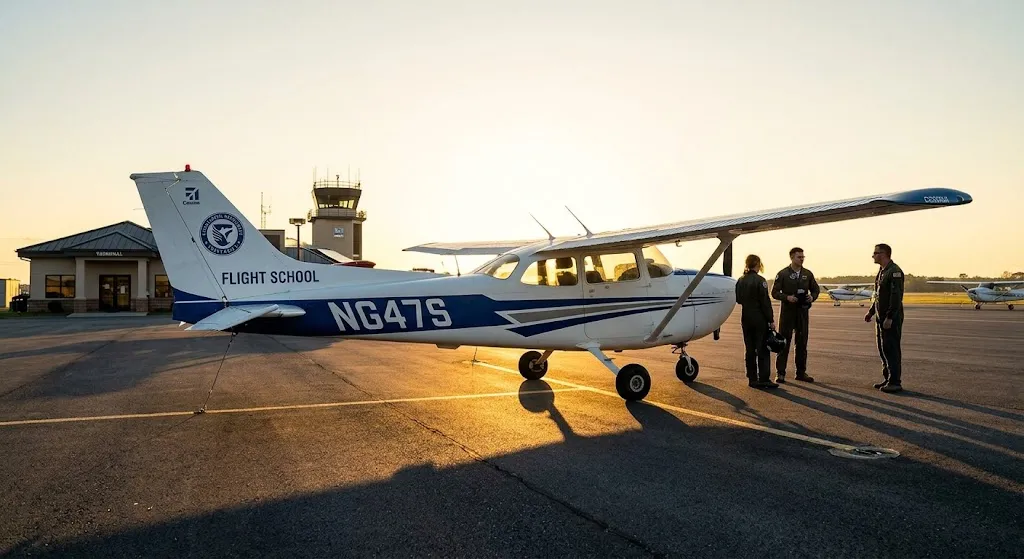
A flight school can have plenty of demand and still struggle to grow.
The problem usually isn’t finding students. It’s having enough aircraft available to keep lessons moving, instructors productive, and maintenance downtime from disrupting the schedule.
That’s where flight school aircraft financing becomes more than a way to purchase another trainer. Used strategically, financing can help a school increase capacity, replace aging aircraft, and build a fleet that supports enrollment without tying up too much working capital at once.
The key is knowing when expansion makes sense, which aircraft belong in the fleet, and how to structure the purchase around actual utilization.
When Does a Flight School Need Another Aircraft?
Adding an airplane should solve a measurable operational problem.
If students regularly wait several days for an available aircraft, instructors are competing for scheduling slots, or routine maintenance creates widespread cancellations, the current fleet may be operating too close to capacity.
A growing school should pay particular attention to three indicators.
Scheduling Is Consistently Tight
A busy calendar is good. A calendar with no flexibility is not.
When nearly every trainer is booked throughout the day, one maintenance event can create a chain of cancellations. An additional aircraft provides scheduling margin and gives instructors more flexibility when weather or student availability changes.
Student Enrollment Is Growing Faster Than Aircraft Availability
More students only create more revenue if the school can actually provide the flight hours they need.
If enrollment grows while fleet size stays unchanged, lesson frequency may decline. That can slow student progress and put unnecessary pressure on instructors.
Maintenance Downtime Is Affecting Training
Aircraft will occasionally be unavailable. The question is whether the rest of the fleet can absorb that downtime.
A properly sized fleet allows maintenance to happen without bringing the training schedule to a standstill.
Which Aircraft Make Sense for Flight School Growth?
Not every new aircraft has to expand capability. Sometimes the smartest purchase is simply another proven trainer.
The right choice depends on the courses the school offers and where scheduling pressure is highest.
Primary Training Aircraft
Aircraft used for private pilot instruction need predictable handling, accessible maintenance, and reasonable operating costs.
The Cessna 172 remains one of the most common choices because it can support primary training, instrument instruction, rental activity, and time building. That versatility is why Cessna 172 financing frequently becomes part of flight school fleet planning.
Piper Warriors and similar piston singles can fill the same role depending on the school’s existing fleet and instructor familiarity.
Instrument and Advanced Training Aircraft
Schools expanding beyond primary instruction may need aircraft with appropriate avionics and equipment for instrument training.
Rather than adding an aircraft used for only one course, operators often benefit from selecting equipment that can support several phases of training.
Higher utilization generally makes the financing easier to justify operationally.
Multi-Engine Training Aircraft
Adding multi-engine instruction can expand a school’s course offerings, but the economics are different.
Multi-engine aircraft typically introduce higher acquisition, fuel, insurance, and maintenance costs. Before financing one, the school should have enough expected training demand to keep the aircraft productive.
How Much Aircraft Can a Flight School Realistically Support?
This is where fleet growth becomes a numbers exercise.
The purchase price matters, but utilization matters more.
Suppose a new trainer adds 60 to 80 billable flight hours per month. Those hours can help offset the loan payment and operating expenses while also reducing congestion across the rest of the fleet.
A useful forecast should consider expected utilization, hourly training revenue, fuel, insurance, maintenance reserves, scheduled inspections, and financing payments.
That gives the school a clearer idea of whether the aircraft is truly adding capacity or simply adding another fixed expense.
How Training Aircraft Loans Fit Into the Plan
Training aircraft loans allow flight schools to add capacity without committing the entire purchase price upfront.
That can preserve cash for other areas of the operation, including instructor payroll, maintenance reserves, marketing, simulator equipment, and facility improvements.
Financing structures vary according to the aircraft, transaction, and school’s financial profile. In general, lenders will want to understand the aircraft being purchased, how it will be used, and the financial position of the business.
The strongest financing strategy leaves enough room for the aircraft to operate comfortably after the purchase.
One Aircraft or a Full Fleet Financing Strategy?
There is a major difference between buying one additional trainer and planning several years of fleet expansion.
A smaller school may simply need aircraft loans for flight schools to add its next aircraft.
A larger operation may need a broader strategy.
Adding Capacity
When enrollment is rising, financing additional aircraft can help a school increase available training hours without waiting to accumulate the full cash purchase price.
Replacing Older Trainers
Fleet growth does not always mean increasing aircraft count. Sometimes replacing a heavily utilized older trainer with a newer aircraft can improve reliability and reduce downtime.
Expanding Training Programs
A school adding instrument, commercial, or multi-engine programs may need entirely different aircraft categories.
This is where fleet financing for flight schools becomes useful as a planning concept. Instead of treating each purchase independently, the school can evaluate how multiple acquisitions fit into enrollment projections and future training demand.
What Flight Schools Should Prepare Before Applying
A strong financing application tells a clear business story.
Before approaching a lender, it helps to organize the information that explains both the purchase and the reason behind it.
Define the Aircraft’s Role
Know whether the aircraft is being purchased to increase primary training capacity, replace an existing trainer, or introduce a new program.
Estimate Utilization
Project realistic monthly flight hours rather than assuming maximum scheduling capacity.
Understand Total Operating Cost
Include maintenance, inspections, fuel, insurance, and reserves alongside the loan payment.
Keep Aircraft Documentation Organized
For used aircraft, maintenance history, condition, and records can influence both valuation and the financing process.
Why Working Capital Still Matters After the Purchase
One of the advantages of financing is that a school does not need to direct all available capital toward aircraft acquisition.
That matters because growth creates expenses outside the airplane itself.
Additional students may require more instructors. More aircraft create additional maintenance demand. A growing school may also need improvements to scheduling systems, facilities, advertising, or administrative support.
Financing can help preserve capital for those needs while still increasing training capacity.
The aircraft should support growth without consuming the resources needed to operate the rest of the business effectively.
Grow Your Training Fleet with AirFleet Capital Inc
A flight school does not need more airplanes simply for the sake of having a larger fleet. It needs enough of the right aircraft to keep training moving consistently.
At AirFleet Capital Inc, we help schools evaluate flight school aircraft financing around the realities of training operations, from single-aircraft acquisitions to broader fleet growth.
Whether you are adding another Cessna 172, replacing an older trainer, or expanding into a new training program, we can help you explore financing that supports both the aircraft purchase and the business behind it.