Ask how much a car costs and you already know the answer depends on what kind.
Aircraft are no different. Except the range is considerably wider.
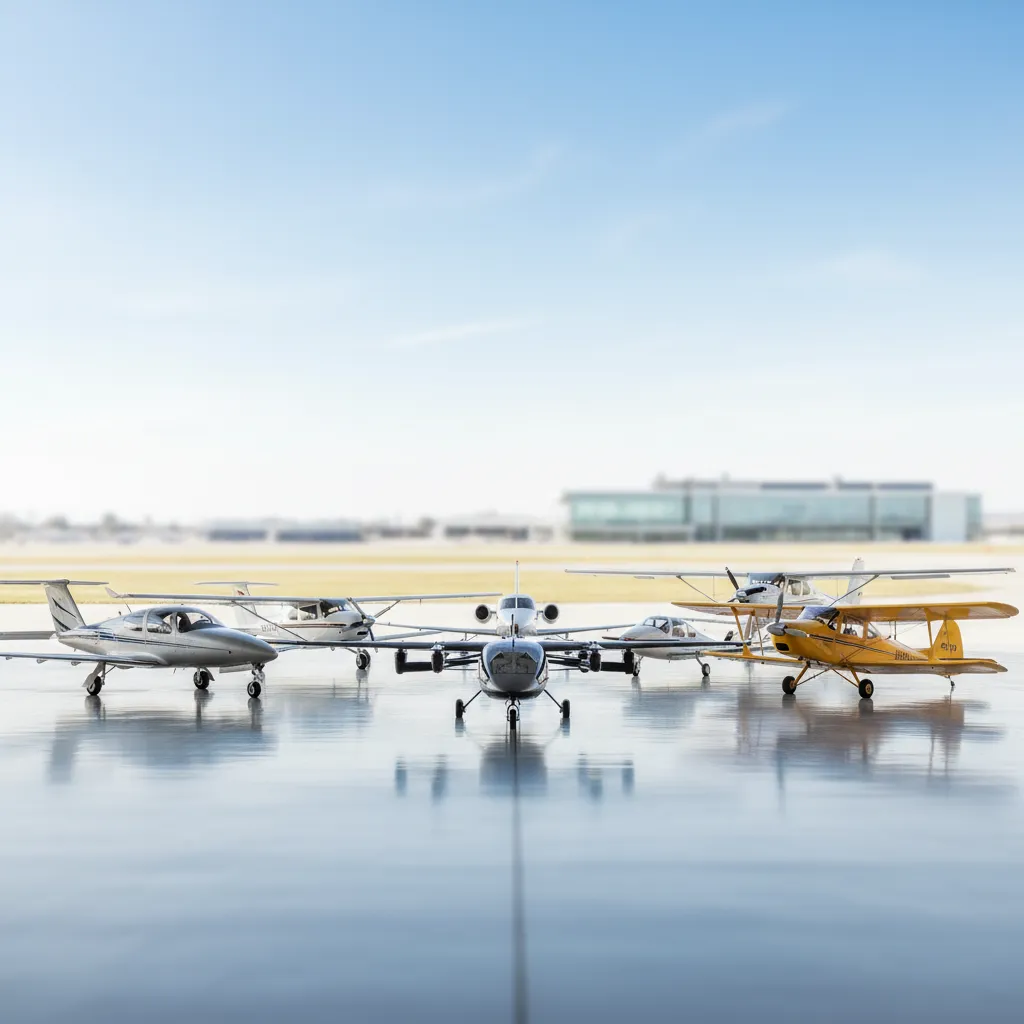
An older piston single can cost less than some new luxury vehicles, while a new business jet can climb well into eight figures. Between those extremes are piston twins, high-performance singles, turboprops, and light jets serving very different missions.
So, how much does an airplane cost?
Let’s look at purchase prices by aircraft category and, more importantly, what makes one airplane worth substantially more than another.
A Quick Look at Aircraft Purchase Prices
The aircraft market stretches from relatively attainable owner-flown piston airplanes to multimillion-dollar turbine aircraft.
Broadly, buyers may encounter:
-
Older piston singles beginning in the tens of thousands
-
Newer and high-performance piston aircraft reaching several hundred thousand dollars or more
-
Piston twins commonly moving further into six figures
-
Turboprops ranging from around $1 million for some older aircraft to several million for newer models
-
Used light jets beginning in the low millions
-
New business jets reaching $10 million and far beyond, depending on category
Those ranges are intentionally broad.
Aircraft pricing depends heavily on the individual airplane, not merely the category printed on the listing.
How Much Does a Single-Engine Airplane Cost?
For many private owners, piston singles are the starting point.
They cover an enormous section of the market, ranging from basic training aircraft to sophisticated high-performance airplanes.
Older and Entry-Level Piston Singles
Aircraft such as older Cessna 150s and 152s can sometimes be found around the lower end of the personal-aircraft market.
Cessna 172s and Piper Cherokee-family aircraft cover much broader ranges. Depending on year, condition, avionics, engine time, and upgrades, asking prices can vary from well below $100,000 to several hundred thousand dollars.
That’s why asking “How much does a Cessna 172 cost?” rarely produces one useful answer.
You need to know which Cessna 172.
Newer and High-Performance Piston Singles
Move into newer aircraft or higher-performance platforms and the numbers change quickly.
Modern avionics, more powerful engines, better equipment, and younger airframes can push piston-single pricing into several hundred thousand dollars, with some new aircraft approaching or exceeding the $1 million mark.
At this end of the market, buyers aren’t simply paying for four seats and one engine. They’re paying for capability, equipment, age, and condition.
How Much Does a Twin-Engine Airplane Cost?
Piston twins occupy another broad section of the market.
Used aircraft such as Piper Senecas and Beechcraft Barons can vary considerably in price, with examples commonly stretching from the low-to-mid six figures upward depending on age and configuration.
The number of engines isn’t the only factor.
A well-equipped twin with desirable avionics, documented maintenance, and lower engine time can command a substantial premium over an older example of the same model.
For buyers comparing singles and twins, this is where shopping based on model averages can become misleading.
Individual aircraft condition matters tremendously.
How Much Does a Turboprop Cost?
Turboprops represent a major step up in acquisition price.
Older turbine aircraft may enter the market around $1 million, while popular used owner-flown turboprops can reach several million dollars.
Examples from the broader turboprop market include aircraft from TBM, Pilatus, Cessna, Piper, and other manufacturers.
Newer models can move toward $5 million or more depending on aircraft, options, and market conditions.
The key point isn’t the exact number attached to one listing.
It’s the size of the range.
A turboprop that’s 15 or 20 years old may share a model family with a much newer aircraft but occupy an entirely different price bracket.
How Much Does a Private Jet Cost?
“Private jet” may be one of the broadest pricing categories in aviation.
A smaller used jet and a new large-cabin business jet technically belong under the same umbrella, but financially they have little in common.
Used Light Jets
Some used light jets can be found in the low millions.
Aircraft in Citation and Phenom families, for example, cover a wide spectrum depending on generation, hours, equipment, maintenance status, and engine programs.
An older aircraft may have an attractive acquisition price, but buyers should understand why the market values it at that level.
Midsize Jets
Used midsize business jets commonly move further into multimillion-dollar territory.
Again, age creates enormous variation. An older midsize aircraft may cost less to purchase than a much newer light jet.
That’s a good reminder that aircraft category alone doesn’t establish value.
New Business Jets
New light jets commonly cost several million dollars, while larger new business jets can climb far beyond $10 million.
At that point, configuration, cabin design, equipment, range, manufacturer, and delivery position can all influence the final acquisition cost.
Why Two of the Same Airplane Can Have Very Different Prices
This is where aircraft pricing gets interesting.
You can find two airplanes with the same make and model and see a substantial gap between their asking prices.
There are several reasons.
Aircraft Age
A newer aircraft generally commands more, but age alone isn’t enough to determine value.
A carefully maintained older aircraft may be more attractive than a younger one with a weaker history.
Engine Time
Where the engine sits in its maintenance cycle can have a major effect on value.
An aircraft approaching significant engine work may be priced differently from one with substantial time remaining.
Avionics
Panel upgrades can dramatically alter market appeal.
Modern avionics can add capability while saving a new owner from needing an expensive upgrade shortly after purchase.
Maintenance History
Aircraft records matter.
A strong, well-documented maintenance history gives buyers a clearer understanding of what they’re purchasing.
Missing records, deferred work, damage history, or unresolved maintenance questions can influence value.
Equipment and Upgrades
Air conditioning, deicing equipment, interiors, paint, connectivity, engine programs, and other options can all affect pricing depending on the aircraft category.
Market Demand
Aircraft aren’t immune to basic economics.
Models with strong buyer demand and limited inventory may command higher prices, while less desirable aircraft can sit longer and sell differently.
New vs. Used: Which Price Matters More?
Buying new gives you a much more predictable starting point.
You know the aircraft’s history because there essentially isn’t one yet. You’re also getting current equipment and manufacturer support.
The tradeoff is price.
Used aircraft may offer substantially more capability for the same acquisition budget, but comparison becomes more complicated.
You need to evaluate:
-
Hours
-
Maintenance
-
Engine status
-
Avionics
-
Damage history
-
Logbooks
-
Upgrades
-
Pre-purchase inspection findings
This is why the lowest-priced example of a particular model isn’t automatically the best deal.
How Much Airplane Should You Buy?
A purchase budget should follow your mission.
If you mainly fly shorter recreational trips with one passenger, a multimillion-dollar turbine aircraft would obviously solve problems you don’t have.
The same principle applies on a smaller scale.
Before increasing the budget, ask what the additional money is actually buying you:
More range?
More useful load?
More seats?
Higher speed?
Better weather capability?
Newer equipment?
If the capability matters for your mission, the additional investment may make sense.
If it doesn’t, you may be paying for an impressive specification rather than a useful one.
Where Aircraft Financing Fits Into the Purchase
Once you know the type of aircraft and approximate price range you’re considering, financing becomes easier to discuss.
Aircraft financing is based on more than the purchase price alone. The aircraft itself, requested loan amount, credit, cash flow, liquidity, ownership structure, and broader financial picture can all play a role.
Larger or more complex transactions may also require additional documentation.
Talking about financing earlier in the shopping process can help you understand what price range and transaction structure make sense before you’re ready to close.
Turn the Asking Price Into a Purchase Plan
So, how much does an airplane cost?
Anywhere from tens of thousands of dollars to tens of millions.
But the useful answer is much narrower once you identify your mission, preferred aircraft category, and realistic purchase budget.
At AirFleet Capital, we finance piston aircraft, turboprops, and jets for buyers across the country. We work with clients to understand the aircraft they’re purchasing and the financial picture behind the transaction, then help them explore financing options that fit.
Already comparing aircraft? The year, make, model, and expected purchase price are a great place to start.