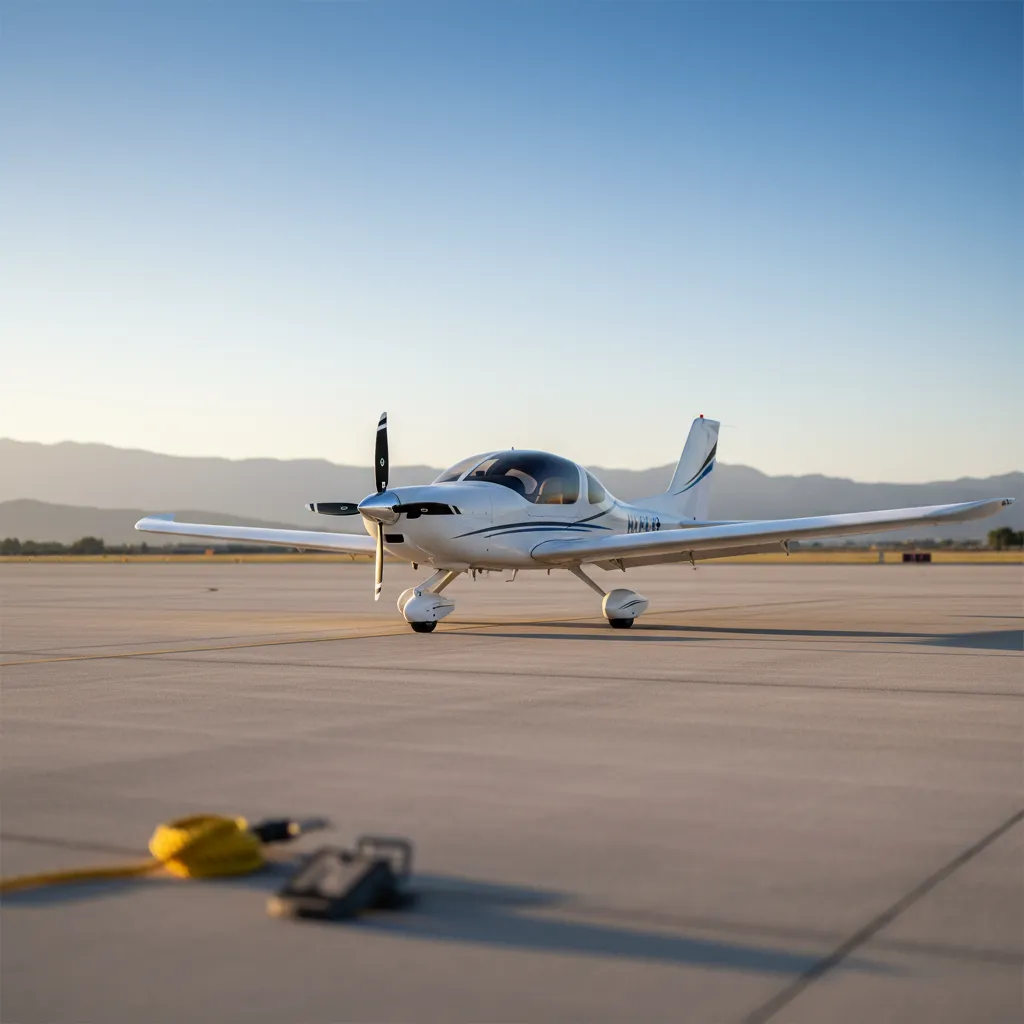
Shopping for a personal airplane can get confusing fast.
One listing makes aircraft ownership look surprisingly attainable. The next costs several times as much, even though the airplanes seem to serve a similar purpose. Then avionics, engine time, maintenance history, and financing enter the conversation.
So instead of asking only, “What is the cheapest personal airplane?” it helps to ask a better question:
What kind of airplane makes sense for the amount I’m prepared to spend?
Your purchase budget won’t tell you everything, but it can narrow the field considerably. Here’s how different price points can shape your search.
Start With Your Aircraft Budget, Not a Specific Model
It’s easy to fall in love with an airplane before figuring out whether it works financially.
Flipping that process can save a lot of frustration.
Start by deciding how much capital you’re comfortable putting toward the purchase, whether you plan to finance, and how much liquidity you want to keep available after closing.
Then consider the mission.
Are you looking for:
-
An economical airplane for recreational flying?
-
A first aircraft after renting or training?
-
Something capable of regular cross-country trips?
-
More useful load and passenger space?
-
Modern avionics?
-
Higher speed and performance?
A $75,000 airplane and a $250,000 airplane can both be “personal aircraft,” but they may serve very different owners.
Shopping Below $75,000: Keep the Mission Simple
At the lower end of the market, buyers will typically spend more time looking at older piston aircraft and basic trainers.
Aircraft such as older Cessna 150s and 152s are among the models that can appear in this part of the market. Older examples of other simple piston singles may also fall within reach depending on condition, equipment, and engine time.
The appeal is obvious: acquisition costs can be considerably lower.
But a low asking price deserves a closer look.
What You May Be Trading for the Lower Price
An inexpensive aircraft could have:
-
Older avionics
-
Higher airframe or engine time
-
Cosmetic wear
-
Upcoming maintenance
-
An engine closer to overhaul
-
Fewer upgrades
-
A more limited mission
None of those automatically make the airplane a bad purchase.
They do mean you need to evaluate why it is inexpensive.
A $50,000 airplane that immediately requires significant maintenance can look very different from a well-maintained $70,000 airplane once the first year of ownership is over.
Around $75,000 to $150,000: More Choices Open Up
Move the budget higher and the personal-aircraft market becomes broader.
Depending on age, equipment, and condition, buyers may begin finding more choices among aircraft such as Cessna 172s and Piper Cherokee-family models.
This range may also provide opportunities to choose between:
-
Lower purchase price with older avionics
-
Higher price with upgraded avionics
-
Higher engine time versus lower engine time
-
Basic aircraft versus better-equipped examples
That last point matters.
Two airplanes with the same model name can have very different values. One may have a modern panel and recent engine work. Another may still have older instrumentation and an overhaul approaching.
The badge on the airplane doesn’t determine whether it’s a good value. The individual aircraft does.
Around $150,000 to $300,000: Capability Starts to Matter More
At this point, the conversation often changes.
Instead of asking, “What is the cheapest airplane I can buy?” buyers may start asking:
What additional capability am I getting for the money?
A larger budget can open the door to newer aircraft, upgraded panels, stronger maintenance histories, more useful equipment, and more capable piston models.
This is also where the mission needs to become more specific.
If most of your flying is local and recreational, paying substantially more for speed or equipment you rarely use may not make sense.
But if you expect regular cross-country travel, IFR flying, family trips, or business use, paying for additional capability may be worthwhile.
Your budget should support the way you actually intend to fly.
$300,000 and Up: Think Beyond “Entry-Level”
Once the budget moves into the higher end of the piston market, buyers can start evaluating significantly more capable owner-flown aircraft.
Depending on the budget, this can include newer piston singles, higher-performance models, better-equipped aircraft, and eventually opportunities to consider more advanced categories.
At this level, purchase price becomes only one part of the decision.
Insurance requirements, training, maintenance complexity, engine reserves, and financing can all change as aircraft capability increases.
The important question becomes:
Are you buying capability that your mission genuinely requires?
There’s nothing wrong with buying more airplane. But there should be a reason for it.
Why the Cheapest Personal Airplane Isn’t Always the Most Affordable
Here’s the tricky part: “cheap to buy” and “affordable to own” aren’t the same thing.
Imagine two similar aircraft.
Aircraft A costs less but has an engine approaching overhaul, dated avionics, and several maintenance items on the horizon.
Aircraft B has a higher asking price but comes with stronger records, more engine time remaining, and equipment you wouldn’t immediately need to replace.
Aircraft A wins the purchase-price comparison.
Aircraft B might win the financial comparison.
That’s why buyers should look beyond the listing price and review the condition and history of the actual aircraft.
Set a Purchase Budget and an Ownership Buffer
There’s another number worth deciding before you shop: how much money do you want available after buying the airplane?
Aircraft ownership comes with expenses that don’t politely wait until your finances are convenient.
Maintenance happens. Insurance renews. Hangar bills arrive. Equipment fails.
Putting every available dollar into the purchase can leave very little room for the ownership part.
A more comfortable strategy is to think in two buckets:
The Acquisition Budget
This includes your purchase price, down payment, applicable transaction expenses, and financing plan.
The Ownership Reserve
This is the financial breathing room you maintain for maintenance, inspections, upgrades, and unexpected expenses after closing.
An airplane you can purchase but can’t comfortably maintain probably isn’t within your real budget.
Can You Finance a Lower-Priced Personal Aircraft?
Financing can be available for many personal aircraft purchases, but the aircraft and borrower both matter.
Age, value, condition, loan size, and other aircraft characteristics can affect the available financing. Your personal financial picture matters as well.
That’s why it can be useful to speak with an aircraft finance specialist while you’re shopping rather than waiting until you’ve already committed to a particular airplane.
You may discover that two similarly priced aircraft create very different financing scenarios.
Build Your Shortlist Around Your Real Mission
Once you establish your price range, narrow your options by asking a few practical questions:
How many people will usually fly with you?
Don’t shop for six seats if nearly every flight will involve one or two people.
How far will you typically fly?
Local recreational flights call for a different aircraft than frequent regional travel.
What equipment do you actually need?
A sophisticated avionics panel is valuable when it supports the kind of flying you do. It’s less compelling when you’re paying for capability you won’t use.
How much maintenance complexity are you comfortable carrying?
More systems and performance can mean more responsibility and potentially greater expense.
Will this airplane still fit your needs in a few years?
Buying something you immediately outgrow can be expensive too.
Find the Airplane That Fits Your Budget With AirFleet Capital
The cheapest personal airplane isn’t necessarily the airplane with the smallest number on the listing.
It’s the one that gives you the capability you need without putting unnecessary pressure on the rest of your financial plans.
At AirFleet Capital, we work with aircraft buyers across a wide range of owner-flown purchases. We can help you understand how financing may fit the aircraft you’re considering and what information will be needed as you move toward a purchase.
Know your budget. Know your mission. Then find the aircraft where the two meet.